
yy@yoonyeetools.com
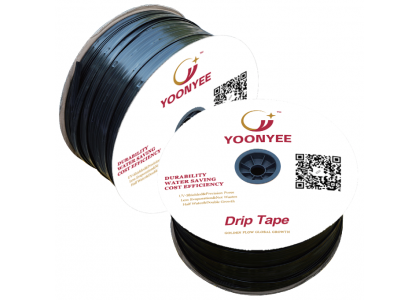
Struggling to select drip tape?
Learn 6 key factors for choosing the best drip irrigation tape for your farm/garden. Save water & boost yields!
Introduction
Drip irrigation tapes are game-changers for precision watering, but choosing the wrong type can lead to clogging, uneven watering, and wasted resources. With over 20+ drip tape varieties on the market, how do you pick the perfect one? This guide breaks down the 7 critical selection criteria used by professional growers.
Section 1: Understand Your Water Source (Keyword: drip tape water quality requirements)
Problem: Hard water? High sediment? Poor filtration damages drip systems.
Solutions:
Test water pH & sediment levels (ideal: pH 5-7, <80 mesh particles).
Match tape type: Use pressure-compensating (PC) drip tape for uneven terrain or long rows.
Install 200-mesh filters for sandy water sources.
Section 2: Tape Thickness Matters (Keywords: drip tape thickness guide, mil vs mm drip tape)
Compare common thickness options:
Thickness Use Case Lifespan
4-6 mil Single-season crops (e.g., vegetables) 1 year
8-10 mil Multi-year orchards 2-3 years
12-15 mil Permanent installations 5+ years
Pro Tip: Thicker tapes (>10 mil) resist rodent damage – critical for organic farms.
Section 3: Emitter Spacing & Flow Rate (Keywords: drip tape emitter spacing, gph drip tape)
Crop-Based Selection:
4-6" spacing: High-density plants (carrots, lettuce)
8-12" spacing: Row crops (tomatoes, berries)
18-24" spacing: Orchards/vines
Flow Rates:
Low (0.2-0.4 gph): Clay soils, slopes
Standard (0.5-1.0 gph): Most vegetables
High (>1.0 gph): Sandy soils
Section 4: Pressure Compensation (PC) vs. Non-PC
Feature PC Drip Tape Non-PC Drip Tape
Terrain Slopes >2% Flat fields
Row Length >250 ft <250 ft
Cost 20-30% higher Budget-friendly
Section 5: Material & UV Resistance
Avoid cheap PVC tapes – degrade quickly under sun exposure.
Look for LLDPE (linear low-density polyethylene) with UV stabilizers – resists cracking for 3+ seasons.
Section 6: Clogging Prevention Features
Self-cleaning emitters: Flush debris automatically (e.g., Turbo Tape).
Root barriers: Built-in chemical inhibitors for invasive roots.
"Request free samples from suppliers to test flow uniformity and durability. For large farms, run a 1-acre trial plot before full rollout." – David Chen, Irrigation Specialist at Agriculture-tech Solutions